
By Saifullahi Attahir
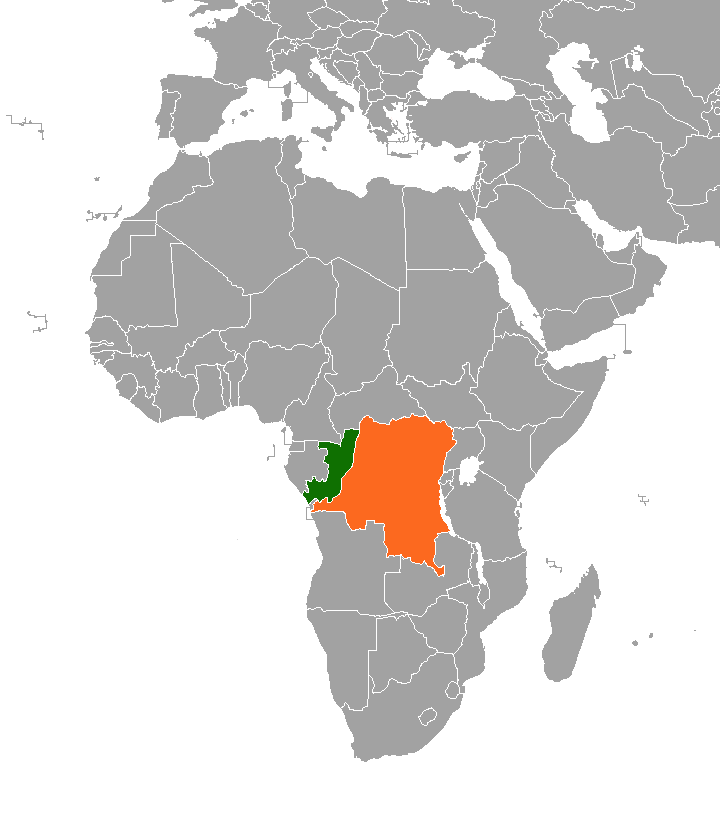
Pascal Lissouba was a former President of the Republic of Congo Brazzaville, a country located very close to its counterpart, DRC Congo, with the capital Kinshasa. The story of these two close neighbours was another irony of our continent; both capitals are only separated by a river, which you can easily spot each other by mere sight. They share much in common but bitterly sabotage each other due to mere nonsensical issues of tribe and language. To the benefit of their former masters, this division created an opportunity to be ruled and controlled by their former colonists.
He was born around the 1940s to a middle-income family in a village before the country’s independence. He studied in a government-run school and was an intelligent student, culminating in gaining a scholarship to study Agriculture at France’s elite academy Ecole in Paris. He had a stint in Paris working as a scientist before returning home and starting a job as a senior civil servant in the Ministry of Agriculture under President Massamba Debat.
His expertise was noticed, and he soon climbed the social ladder and became the minister of Agriculture in less than a decade. He held other positions in the Debat government. He was later promoted to prime minister until their government was overthrown by an army General called Denis Sassou Nguesse. His former boss was assassinated while he was forced to resign.
Amidst this impasse, Oil (petroleum crude oil) was the central player in all this and the future unrest that would follow in this tiny country. It was discovered a little while around the 1960s, after the country gained independence, and most of the exploration, production, and transactions were handled between the government and the giant French conglomerate Elf OIL COMPANY. The deal was marred with corruption and shadowy manoeuvres, and the oil money was mostly stacked in the Paris banks. The little that got to the Congolese is also largely slashed by the politicians and the ruling class, and only little or none of the ordinary citizens of Congo benefit from this newly found wealth.
Another problem was that the discovery of this oil led to the development of Dutch disease, where the government abandoned other key infrastructural income sectors like agriculture. The common populace, too, abandoned their homes and rushed for the golden egg, only to meet with frustration. This oil also created another problem of division and hatred among the different tribes of the country; everyone was trying to dominate his brother for the booty, and no one thought for the country.
During this period, Pascal Lissouba retired from Politics and worked as an academician and genetic lecturer at the University, initially in Paris and later in his country, Congo.
Despite the world crude oil prices in the 1970s rising due to the historic Arab Embargo, Congo Brazzaville began accumulating debts by being involved in elephant projects and depending so much on the Pseudo Economic consultant’s advice. The economic situation in the country starts to change for the worse; salary arrears accumulate for several months, inflation rises high, and hunger begins to appear. The president of that time became unpopular, creating a chance for the emergence of Pascal Lissouba as the new President of the Republic of Congo Brazzaville after an election in 1992.
It was reported that Pascal became President with the support of France and the Elf oil company with the agreement of continuing business as usual, allowing the monopoly exploration of Congo Crude oil by the Elf company only. After he settled down as the president, Pascal began to see the absolute mess his country was already in, with billions of dollars in debt and the continued siphoning of the little they got through corrupt middlemen. He discovered that almost 2/3 of their earning went into debt servicing with nothing to show of what was done with the loan received in the first instance.
He, too, begins to face public resentment due to over six months of salary arrears his government owes to workers. Face with no alternative, he rushed to Paris, met President Mitterrand for help, and was surprisingly denied. He ran to the Elf company for aid and was negotiated under terms that included conceding several millions of crude oil barrels in advance. This Mr Pascal turns down too.
Cleverly and courageously, He went to an American oil company called The Occidental and secured a deal that assured his country to collect a loan of $150 million in exchange for an oil exploration license to the company. Desperate to satisfy his people and to quench their thirst, plus an election around the corner, he quickly rushed home and, to the applause of his people, indeed won the mid-term election.
The problem between his government and the Elf Company for including the Occidental in oil exploration begins to develop. President Mitterrand also backed the grudge, and soon, Paris began to lose ties with its former friend and started supporting a new one called Suisse Nguesse.
Nguesse, desperate for power, couldn’t allow him to wait for election time but began to finance militias to ouster President Lissouba. The country was thrown into civil war between 1995 and 1997 until President Lissouba was overpowered off course with the help of foreign powers and military intelligence. President Pascal Lissouba fled the country and was exiled to London.
This essay was written to highlight the complex situation of most African countries, especially those that depend on Natural resources such as crude oil as the sole source of exchange earnings. The story is not much different in countries like Angola, Gabon, Central African Republic, and Nigeria. It’s always the same tactics; only the players change, but the game is the same old tricks.
If I were Pascal Lissouba, and God granted me wisdom, courage and fearlessness, I would have begun a mass national orientation campaign before I assumed office to explain to the country the dire need for every citizen to sacrifice for the period ahead so that the whole country would head toward a common goal of emancipation of their natural resource.
I would have renegotiated the oil contract terms with the Elf Company, inviting other key players in the world, especially the global South block, for military and infrastructural aid.
I would have engaged in a constant national campaign to ensure the whole population is well informed to acquire their support for the hard road ahead.
But I begin to doubt the realisation of this dream due to the complex behaviour of our very own people. We Africans are creatures that mostly lack endurance of hardship; we usually prefer short-term gratification of our desires, and most of us can not sacrifice long enough, no matter the value of what is ahead.
We are creatures that easily fall into division; we quickly delve into ethnic, religious, tribal and regional self-interest conflict. We love chaos; we love greediness that surpasses the imagination of any self-conscious human thinking. We can kill because of money; we can sacrifice our brethren because of money, and we can amass so much through the crook method that even our grandchildren cannot spend.
From my perspective, this is not a problem of leadership alone or the problem of a single or few individuals; this is a pandemic disease; it’s almost within the blood of most of us unless those few are chosen. This problem was within every stratum of our society, and I can’t believe the mere excuse of leadership alone as the only cause.
This problem is complex and multifaceted; our people fuelled it, we love the shortcut, everybody loves to arrive quickly, we love overnight riches, and we want enjoyment. Still, we lack a plan and disciplinary execution. Even at the individual level, that is how we are, and that makes our homes and families, so it’s not surprising that we have a nation or continent that laments.
Our people organise the coups; the sabotage is supported by our people. This problem is not peculiar to only politicians; it’s present among college students, academicians, families, workers, and businessmen.
I began to sympathise with people like Pascal Lissouba because most of the men who have tried to oppose the status quo are usually prematurely retired from leadership, and some even, unfortunately, got killed.
Where is Gaddafi, where is Murtala, where is Sankara, where is Abacha, where is Saddam, where is Lumumba, where is Mandela?
Saifullahi Attahir wrote via saifullahiattahir93@gmail.com.