
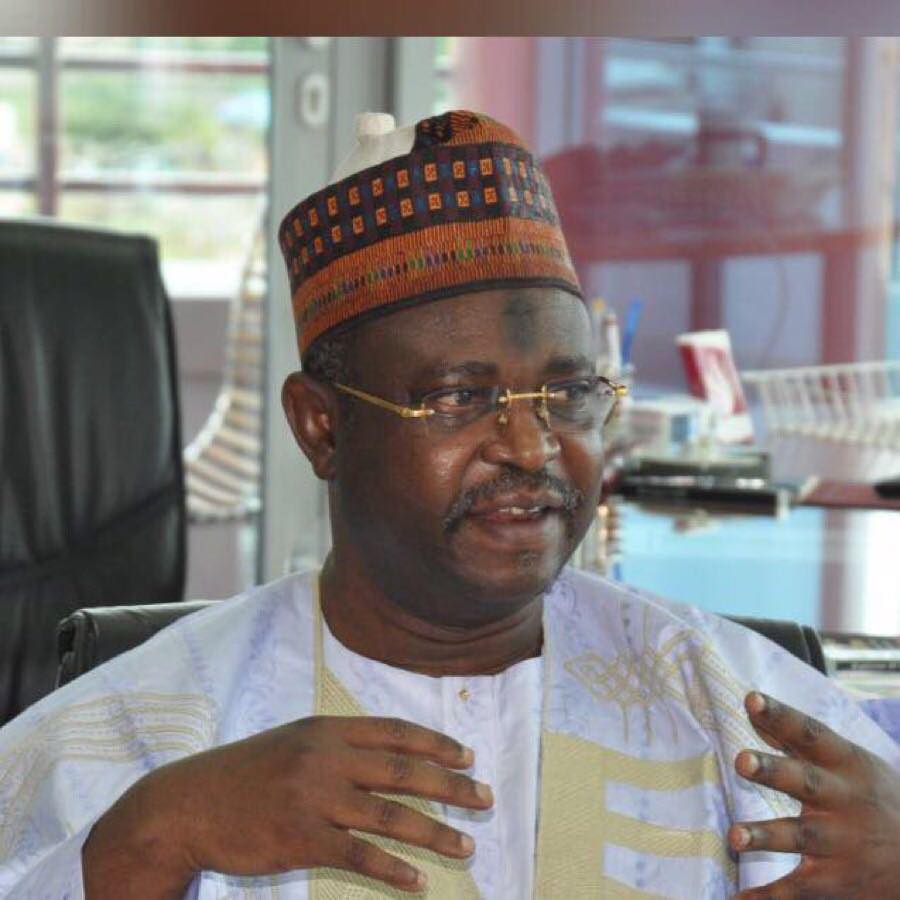
By Amir Abdulazeez
Sometime in 2006, I walked into the famous Gidan Akida building, the then-Kano State headquarters of the Advanced Congress of Democrats (ACD), a new party formed by the breakaway PDP faction. I was there to inquire about how lowly-placed people like us can actively participate in the development of the party. The State Public Relations Officer told me that I have the option of choosing to belong to any of the four main houses within the party: Muhammad Abubakar Rimi, Malam Musa Gwadabe, Alhaji Gwadabe Satatima and Ghali Umar Na’Abba.
When the PRO heard that I cherished them all but wanted to work in the Na’Abba camp, he congratulated me for working under a disciplined, courageous and principled politician. Unknown to him, I had already known Ghali Na’Abba some ten years before, maybe earlier. Apart from being too young to know much about the other three political leaders practically, I have taken time to follow the stewardship of Ghali Na’Abba as the Speaker of Nigeria’s House of Representatives for the better part of 1999-2003.
In that same year, 2006, Na’Abba was declared for the Kano State Governorship. I was genuinely convinced that if elected, he would make Kano one of Nigeria’s most disciplined and organised states. His discipline, confidence and organisation have often been misunderstood as arrogance. On this, he has cleared the air on many occasions. From what I know of him, he was a man of few words expressed only when necessary; he has a gentle and reserved personality, which makes him never delve into affairs that don’t concern him.
I remember working with like-minds to engage in one of the best intellectual mobilisations any young undergraduates could do to garner support for Na’Abba to become Governor then. Unfortunately, he withdrew from the governorship race some weeks before the Action Congress (AC) primary elections. This new party was the product of a merger between ACD, Bola Tinubu’s Alliance for Democracy (AD) and other groups. Ghali’s withdrawal speech wasn’t detailed, but his arguments were that the process was too manipulated for any honest and disciplined aspirant to withstand. I think that was the last time Ghali contested for any position in his political career.
Ghali Umar Na’Abba was more than a political figure—a beacon of integrity, courage, and unwavering dedication to Nigeria. As a former Speaker of the House of Representatives, his legacy resonates far beyond his political tenure. Na’Abba’s commitment to democratic values and principles shaped the course of Nigeria’s political landscape. His leadership during a critical juncture in Nigeria’s history marked him as a staunch advocate for transparency and accountability.
Beyond politics, Ghali Na’Abba was a symbol of resilience and fearlessness, unafraid to challenge the status quo for the betterment of his nation. His vision for a prosperous, united Nigeria was evident in every action and word he spoke.
Na’Abba’s tenure as the Speaker of the House of Representatives marked a significant chapter in Nigeria’s political history. He was known for his principled stance and his assertive approach to upholding the legislature’s independence and separation of powers, particularly in the face of President Olusegun Obasanjo’s bullish administration.
The Fourth Republic in Nigeria was still in its infancy when Na’Abba assumed the role of Speaker. With the country transitioning from years of military rule to a democratic system, the political landscape was rife with challenges. However, Na’Abba brought to the forefront a blend of experience, political acumen, and a commitment to legislative oversight. He staunchly believed in the autonomy of the legislative arm of government and its pivotal role in checking the excesses of the executive. This belief set the stage for numerous clashes between the National Assembly, under Na’Abba’s leadership, and Obasanjo’s administration.
Obasanjo could not have the audacity to unleash his anti-democratic tendencies until Na’Abba left the Speakership in 2003. Every Nigerian who witnessed the two tenures of Obasanjo (1999-2007) will testify to this. During his tenure, Na’Abba led the House of Representatives with a firm hand, asserting the legislature’s independence and challenging executive actions deemed against the national interest. One of the notable confrontations arose from the legislature’s insistence on its oversight function. Na’Abba’s House of Representatives was resolute in investigating various issues, including allegations of corruption within the government, regardless of pressure from the executive arm.
Sadly, today’s many young political followers did not have the opportunity to witness and be inspired by the era of great and principled leaders like Ghali Na’Abba. They are unlucky and unfortunate to find themselves supporting reckless crooks and shameless greedy people who have turned them into sycophants, social media warriors and other roles that have kept them perpetually stupid. These are some of the reasons that have kept Na’Abba on the sidelines since 2007.
Since 2007, whenever Ghali has attempted to reactivate his participation in Nigeria’s political landscape, he has immediately realised there is no space for disciplined people like him. Rather than adjust and follow the trend, he simply retreats and faces his private issues. He had always chosen integrity over selfishness. In 2011, his house was burned down in Kano by hooligans because he supported President Jonathan. I have never heard him complain publicly about this treatment meted out to him by his people. As always, he was calm, reserved and simply forged ahead. That was how he permanently minded his business away from the murky, dirty and irresponsible waters of Nigerian partisan politics.
Today, 27th December 2023, we have lost Ghali Na’Abba, a few months after turning 65 and almost exactly one year apart from the death of his mother, another woman of trust, integrity and kindness. May Allah have mercy on them both. His legacy lives on as an inspiration to current and future leaders. Ghali’s contributions to Nigeria’s democratic journey will forever be remembered and cherished, a testament to the enduring power of principle-driven leadership.
At a point when Kano’s reputation soared by the Salisu Buhari Toronto certificate scandal, Ghali Na’Abba, his successor as Speaker, worked diligently to give the state a good name nationally and even globally. His active career was short-lived, but he managed to enter the comity of the political all-time greats in the history of Kano State. It now remains to see how the current custodians of the state will work to have his name honoured and legacies preserved.
After surviving numerous blackmails, countless threats, and several impeachment attempts as Speaker, President Obasanjo later ganged up with his foot soldiers and garrison commanders in Kano to deny him a return to the National Assembly in 2003. First, they failed to stop him from getting the Kano Municipal PDP ticket, and then they later ganged up to work against him and their own party in the General Elections, and they succeeded. The fall of Ghali Na’Abba marked an abrupt end to the era of Legislative Independence and Political courage in Nigeria.
Twitter: @AmirAbdulazeez