By Sabiu Abdullahi
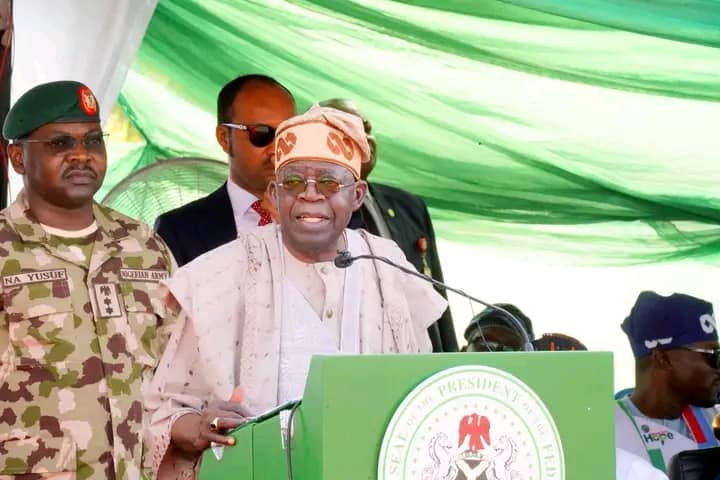
President Bola Tinubu has asked the Nigerian Senate to approve fresh external loans estimated at about ₦9 trillion to ₦9.6 trillion to support the country’s financial obligations.
The request was presented through two separate letters sent to Senate President Godswill Akpabio and read during Tuesday’s plenary.
In one of the letters, the President sought approval to secure a $5 billion facility from Abu Dhabi Bank. The fund is intended to address the budget deficit and meet existing debt commitments. In another request, Tinubu asked lawmakers to approve a $1 billion loan from Citibank in London to finance the rehabilitation of key port infrastructure.
The proposed upgrades will focus on the Lagos Port Complex and Tin Can Island Port, which are among the busiest seaports in the country. According to the President, the project will tackle infrastructure challenges, improve efficiency, strengthen safety standards, and support non-oil trade. He also noted that the move will help position Nigeria as a competitive trade hub in the region.
After the letters were read, Senate President Akpabio referred both requests to the Senate Committee on Local and Foreign Debts, led by Aliyu Wamakko, for further review and quick consideration.
The development comes at a time when concerns continue to grow over Nigeria’s rising debt profile and dependence on external borrowing to fund budget gaps.
It also follows a $1 billion Development Policy Financing loan approved by the World Bank four months ago under the initiative titled “Nigeria Actions for Investment and Jobs Acceleration (P512892).” The facility includes a $500 million International Development Association credit and a $500 million International Bank for Reconstruction and Development loan.
The World Bank explained the objective of the programme in its document, stating: “The proposed Development Policy Financing supports Nigeria’s pivot from stabilisation to inclusive growth and job creation. Structured as a two-tranche standalone operation of US$1.0 billion (US$500m IDA credit and US$500m IBRD loan), it seeks to catalyse private sector–led investment by expanding access to credit, deepening capital markets and digital services, easing inflationary pressures, and promoting export diversification,” the document read.
The Federal Ministry of Finance will oversee the implementation of the facility, as the World Bank has cleared the loan preparation process to move forward.
Since 2023, the Tinubu administration has introduced several economic reforms. These include the removal of petrol subsidy, the unification of exchange rates, and the stoppage of central bank deficit financing. The government said these steps, introduced under the Renewed Hope Agenda, have helped stabilise the economy, reduce the fiscal deficit, and improve investor confidence.
Despite these measures, economic growth remains slow, with over 130 million Nigerians still living in poverty. The World Bank noted that although stability has improved, “Nigeria’s economy has yet to shift decisively into a higher and inclusive growth path,” which highlights the need for increased investment to boost productivity, expand exports, and create jobs.