
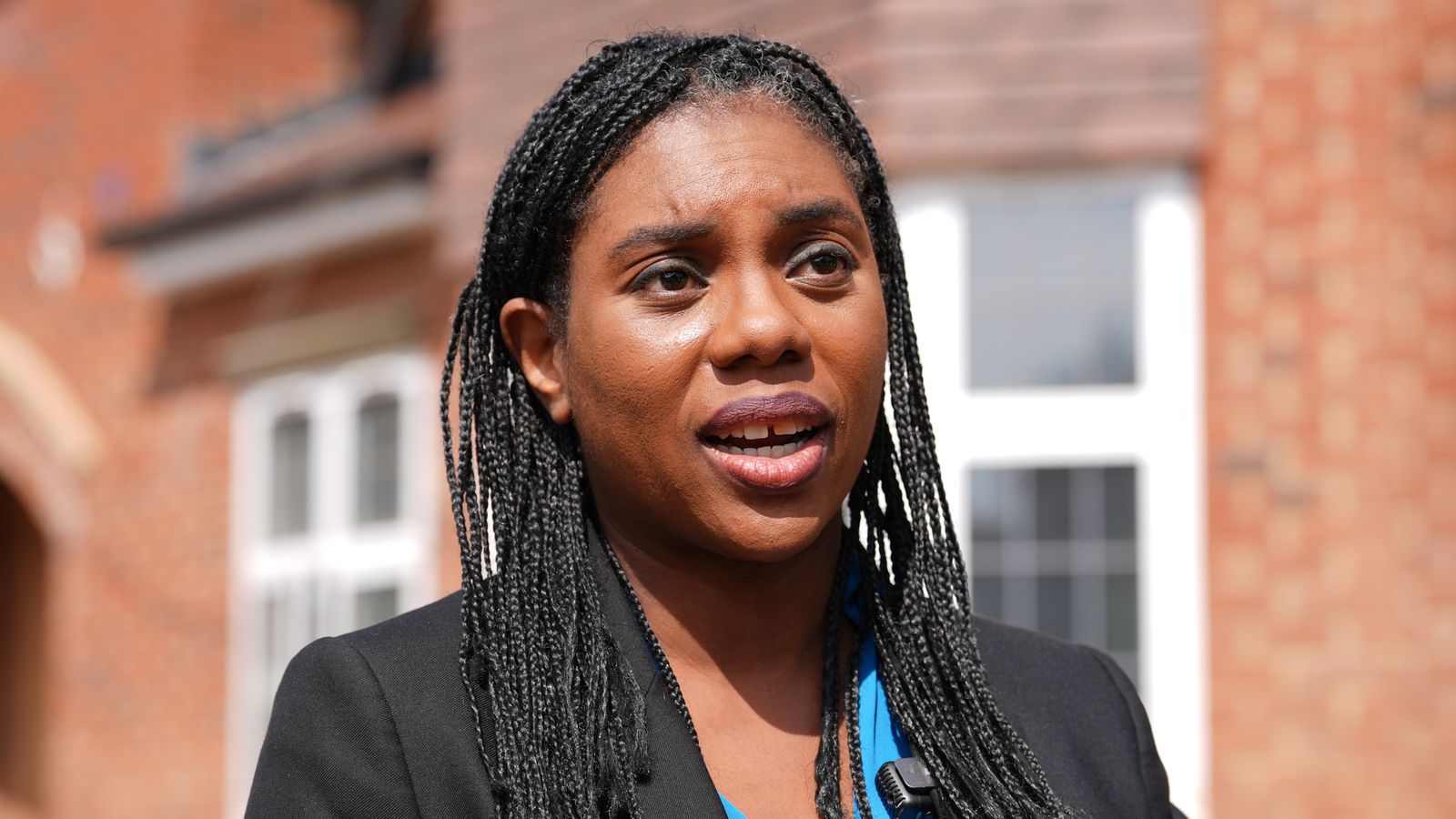
By Sabiu Abdullahi
Leader of the UK Conservative Party, Kemi Badenoch, has faulted the British government for refusing to take a clear stance during a United Nations vote on reparations linked to the transatlantic slave trade.
The criticism followed a resolution adopted by the United Nations General Assembly, where the United Kingdom chose to abstain instead of voting against the motion.
Reacting to the outcome, Badenoch wrote, “Russia, China and Iran vote with others to demand trillions in reparations from UK taxpayers…and the Labour government abstain!”
She also questioned the position of the government led by Prime Minister Keir Starmer. She said, “Britain led the fight to end slavery. Why didn’t Starmer’s representative vote against this? Ignorance…or cowardice?”
Badenoch maintained that the country should not be held financially responsible for historical crimes. She stated, “We shouldn’t be paying for a crime we helped eradicate and still fight today.”
The resolution, backed by 123 countries, describes the transatlantic slave trade as one of the gravest crimes against humanity. It calls for reparations and urges nations to begin structured discussions aimed at addressing the long-term effects of slavery.
Several African nations supported the motion. These include Nigeria, Egypt, Algeria, Libya, Liberia, Kenya and Congo. Other countries such as India, Belarus and Azerbaijan also voted in favour.
However, the United States, Argentina and Israel opposed the resolution. Fifty-two countries stayed neutral. These include major European nations such as France, Germany, Belgium, Hungary and Cyprus.
During the debate, a US representative raised concerns about the proposal. The official said, “While we recognise the wrongs of the past, we are unclear on who the beneficiaries of reparatory justice would be, and therefore cannot support the resolution at this time.”
The motion, titled “Declaration of the Trafficking of Enslaved Africans and Racialised Chattel Enslavement of Africans as the Gravest Crime Against Humanity,” forms part of a broader initiative under the African Union’s reparations programme for 2026 to 2036.
The development marks a major step in global efforts to address the legacy of slavery. It also exposes divisions among world leaders, as debates over reparations continue to generate strong reactions.