By Sabiu Abdullahi
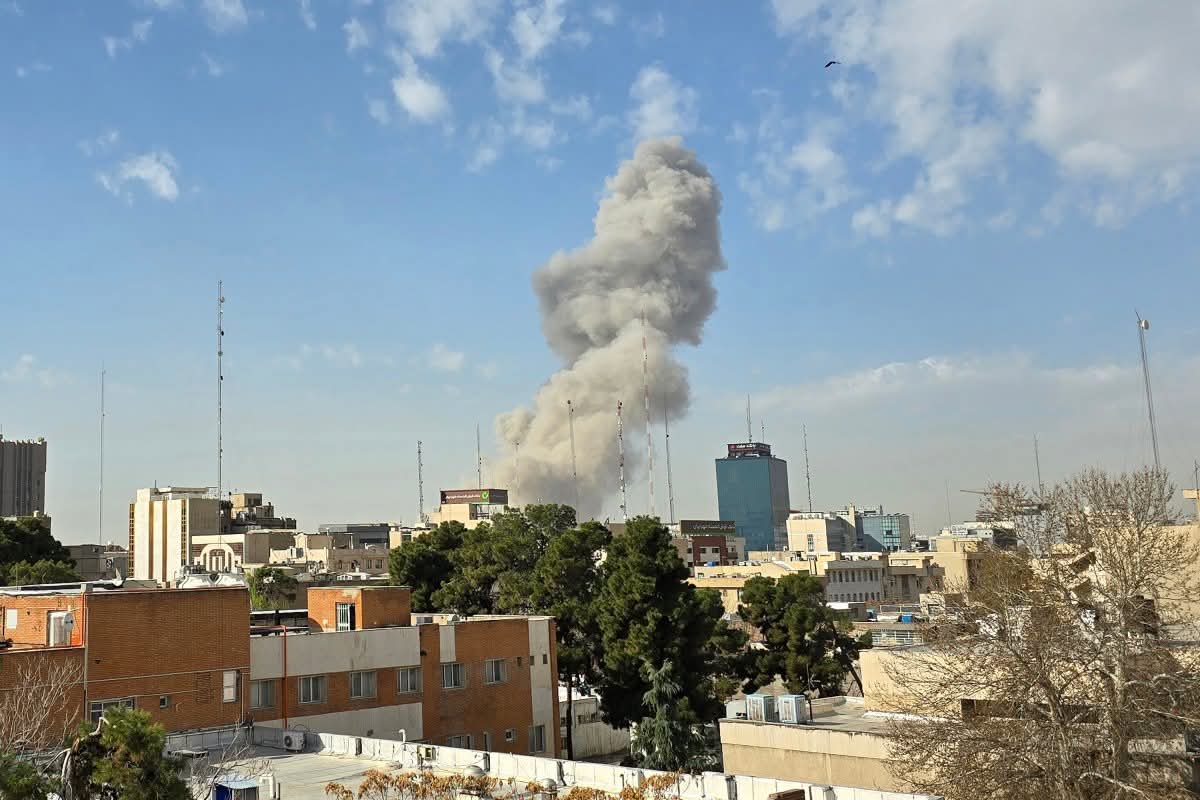
Israel has defended its decision to launch military strikes on Iran, stating that the action complied with international law even in the absence of an imminent attack.
President Isaac Herzog said the joint US-Israeli operation constituted self-defence. He rejected suggestions that Israel needed to present proof of an “immediate use of force” by Tehran before carrying out the assault. According to him, Iran had taken steps toward developing a nuclear weapon that could threaten Israel’s existence.
The remarks place Israel’s position at odds with that of British Prime Minister Sir Keir Starmer, who did not authorise direct British participation in the strikes over the weekend amid concerns about international law.
Speaking on BBC Radio 4’s Today programme, Mr Herzog faced repeated questions about whether Israel possessed evidence of an immediate threat prior to the attack.
He said: “We are not attacking anything civilian. We are attacking places where there are launchers of huge missiles who have created havoc, death and destruction in Israel and in the entire region.”
When pressed again, he pointed to comments made earlier by Sir Keir that Iran had backed more than 20 potentially lethal plots in Britain within the past year.
He said: “If they carried out 20 attacks in Britain, or perpetrated 20 attacks in Britain, you think they didn’t attack Israel? They’ve tried to attack Israel from all corners of the earth in the last two years.”
Asked a third time to clarify the legal basis for the action, Mr Herzog responded: “But that’s not a reason in international law. In international law, you use self-defence when you know that your enemy is perpetrating and planning movement towards a bomb that wants to annihilate you, because they say: ‘This bomb is in order to annihilate you. We need to remove Israel off the map.’”
Under Article 51 of the United Nations Charter, a country may act in self-defence if it suffers an armed attack. Some legal interpretations permit pre-emptive action if the threat is overwhelming and leaves no room for delay.
Sir Keir initially declined a request from Washington to use British military bases, including RAF Fairford and the base at Diego Garcia, for the operation. He later allowed limited use of British facilities after Iran launched missiles across the region. An Iranian Shahed drone struck RAF Akrotiri in Cyprus hours after the strikes.
In a video message posted on X, the Prime Minister said: “The United States has requested permission to use British bases for specific and limited defensive purpose.
“We have taken the decision to accept that request, to prevent Iran firing missiles across the region, killing civilians, putting British lives at risk and hitting countries that have not been involved.”
During the BBC interview, Mr Herzog insisted Israel had evidence of a serious threat.
He said: “We have huge amount of proof, which we are sharing, of course, with our British allies and every other ally. The fact that your base in Akrotiri in Cyprus was attacked for the first time by missiles from Iran, what does it mean?
“They think you’re a friend or a foe? If you’re a foe, then everybody should get together and fight.
“Fight these evil forces and break this empire of evil once and for all, and bring different hope for the region and for the Middle East and for the future of the world. That’s exactly what we do.”
Germany also expressed support for the US action. Chancellor Friedrich Merz said there was little value in debating legal interpretations at this stage.
He said: “Legal assessments under international law will achieve relatively little in this regard, and this applies all the more if they largely remain without consequences … that is why now is not the moment to lecture our partners and allies.”
Mr Merz added that Germany, the United States and Israel shared an “interest in ending this regime’s terror and stopping its dangerous nuclear and ballistic armament”.
The developments have intensified diplomatic tensions across Europe and the Middle East as the conflict widens.