By Sabiu Abdullahi
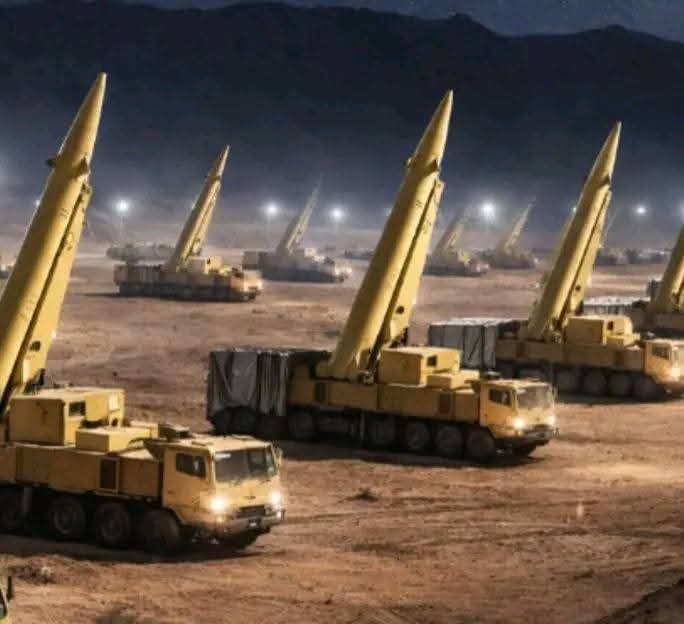
Iran has carried out retaliatory attacks following earlier strikes by the United States, targeting Israel and several American military installations across the Middle East, including in Qatar, Bahrain, Kuwait and the United Arab Emirates.
The escalation has disrupted air travel across the Gulf region. Several countries shut their airspace, which led to the cancellation and delay of hundreds of international flights.
According to Al Jazeera, authorities in Bahrain confirmed that a missile strike targeted the headquarters of the US Navy’s Fifth Fleet. In Qatar, the defence ministry said its Patriot air defence system intercepted an Iranian missile.
Meanwhile, Reuters reported that a loud explosion was heard in Abu Dhabi.
Prior to the escalation, Iran had warned that it would strike American interests in the region if attacked. Reports indicate that several of the targeted bases had already been evacuated, as the US anticipated a possible response.
Iran’s Islamic Revolutionary Guard Corps confirmed that it launched missiles and drones towards Israel. In a statement cited by Al Jazeera, Iran’s Ministry of Foreign Affairs said Israeli strikes earlier in the day hit the country’s “territorial integrity and national sovereignty, including defensive infrastructure and non-military locations in various cities across the country.”
“The renewed military aggression by the United States and the Zionist regime against Iran constitutes a violation of international law and the principles of the United Nations Charter. The Islamic Republic of Iran considers this aggression a clear breach of international peace and security and emphasises that it reserves its legitimate right to respond decisively.
“The Iranian nation has always demonstrated patience and restraint to prevent escalation and preserve regional stability,” it read, adding that the armed forces stand “fully prepared to defend the country and will make aggressors regret their actions.”
Iran also described the attacks by the US and Israel as a “clear example of armed aggression,” while referencing Article 51 of the United Nations Charter, which affirms its right to self-defence.
“History shows that Iranians have never surrendered to aggression. This time as well, Iran’s response will be decisive, and aggressors will regret their hostile actions,” the statement added.
Earlier, US President Donald Trump warned that American casualties could occur as the conflict unfolds.
“The Iranian regime seeks to kill. The lives of courageous American heroes may be lost, and we may have casualties — that often happens in war — but we’re doing this not for now. We’re doing this for the future, and it is a noble mission,” he said in a video message released after the joint US-Israeli strikes on Iran.
He also suggested that the objective includes a possible change in Iran’s leadership.
“When we are finished, take over your government. It will be yours to take. This will be probably your only chance for generations,” the president said, addressing protesters in Iran.
The latest confrontation comes shortly after indirect talks between Iran and the United States over Tehran’s nuclear programme. The timing mirrors a similar development last June, when Israel launched attacks during ongoing negotiations.
Tensions had been building in the region. Several countries, including allies of the US, cautioned against military action, warning that it could destabilise the Middle East.
Both Iran and Israel have now closed their airspace, while air raid sirens continue to sound in Israel. Authorities there have advised residents to seek shelter.
On Friday, countries such as the United States, China and the United Kingdom urged their citizens to leave Iran and Israel due to growing fears of a wider conflict. The US also advised its citizens in Gulf states like Qatar and Bahrain to remain indoors.
This marks the second major confrontation between Iran and Israel in less than a year. The previous clash in June resulted in a 12-day conflict that caused hundreds of deaths and widespread damage on both sides. The United States later joined Israel in striking Iranian targets.
In recent weeks, the US had increased its military presence in the region, deploying additional aircraft and naval assets ahead of the latest strikes despite warnings from global leaders.
The situation remains fluid, and further developments are expected.
Iran launches retaliatory strikes on Israel, US bases across Middle East

ByAdmin
28 February 2026