By Sabiu Abdullahi
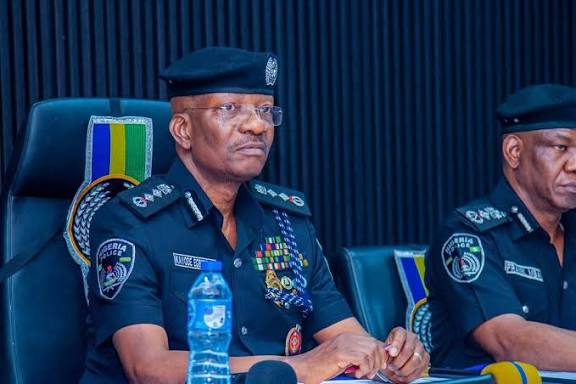
President Bola Ahmed Tinubu has removed the Inspector-General of Police, Kayode Egbetokun, from office.
Reports indicate that the President personally ordered Egbetokun’s dismissal. He is expected to hand over to Tunji Disu, an Assistant Inspector-General of Police in charge of the Force Criminal Investigation Department (FCID) Annex in Alagbon, Lagos.
Senior police officers and sources within the Police Service Commission confirmed the development.
“Egbetokun was at the (Presidential) Villa yesterday and was told to go and prepare his handover notes. I believe he has done that already and he will be handing over to Tunji Disu,” one of the sources said.
Another source criticised the former police chief, stating, “He is incompetent and the scandals are just too many. He is power-drunk. The President said he should leave to focus on getting treatment for himself. You know, he has kidney-related medical issues.”
Some police personnel were said to have celebrated news of his removal.
“Police officers jubilated on Monday when they heard the news. The First Lady Remi Tinubu wanted him to stay but the President was adamant. She fought that he should remain in office despite all the scandals,” a source added.
Egbetokun’s tenure was marked by several controversies. His extended stay in office beyond established retirement limits became a major point of debate. Regulations stipulate retirement at the age of 60 or after 35 years of service.
Civil society organisations and critics argued that his continued stay violated these rules, raising concerns about favouritism and disregard for institutional standards.
There were also allegations involving the rapid promotion of Bukola Yemisi Kuti, a Principal Staff Officer, under unclear circumstances. Critics linked her rise to her closeness to Egbetokun.
In addition, reports alleged that ₦100 million from Anambra State’s security vote was traced to an account associated with Victor, Egbetokun’s son. The claim sparked widespread concern over possible misuse of public funds.
Rather than allowing an independent investigation, authorities were said to have pursued legal action against individuals and platforms that reported the allegations.
During this period, Egbetokun’s office frequently initiated lawsuits against journalists and activists. He filed charges against Omoyele Sowore after the activist referred to him as an “illegal IGP.”
The dispute escalated into a legal battle, with a Federal High Court issuing orders restricting further publications about him and his family. Critics viewed these actions as attempts to silence dissent and limit press freedom.
Following additional reports on alleged promotions and financial misconduct, further court orders were issued barring Sowore and some media platforms from publishing new material concerning Egbetokun, his son Victor, and Bukola Kuti.
Observers argued that instead of addressing the allegations through transparent investigations, the police leadership appeared to rely on legal measures against critics, reinforcing concerns about the handling of the controversy.