By Sabiu Abdullahi
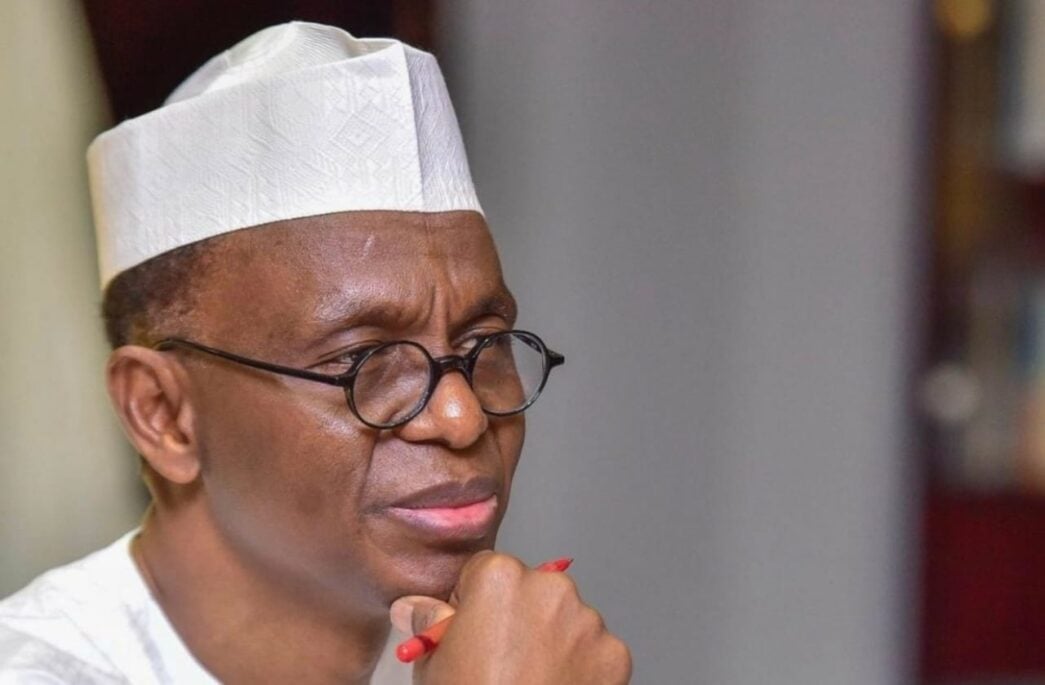
Fresh concerns have been raised over the condition of former Kaduna State governor, Nasir El-Rufai, following claims that he developed a nosebleed while in custody and that his family has faced restrictions in reaching him.
In a statement released on Monday, his media aide, Muyiwa Adekeye, said the former governor has spent eight days in detention after he honoured an invitation from the Economic and Financial Crimes Commission on February 16, 2026.
Adekeye explained that El-Rufai was questioned by officials of the commission and later granted administrative bail. He, however, noted that the former governor remains in custody as his lawyers pursue a review of the bail conditions, which he described as unjustifiable.
The aide also narrated that events took a troubling turn on February 17 when one of El-Rufai’s wives attempted to deliver food to him. She was reportedly stopped from handing it over personally and was asked to pass it through an official of the commission.
He further alleged that the former governor experienced a nosebleed overnight while in detention. According to him, the incident has increased concerns among his legal team regarding his health, welfare, and access to both family members and legal representatives.
Adekeye added that on the night of February 18, El-Rufai was transferred from the custody of the EFCC to the Independent Corrupt Practices and Other Related Offences Commission without prior notice. His lawyers, he said, were not informed before the relocation took place.
Since the transfer, his legal team has applied for bail before the ICPC but is yet to receive a response. Adekeye insisted that no valid remand order has been presented to justify the continued detention beyond constitutional limits.
He disclosed that the former governor is expected to appear before the Federal High Court on February 25 in a fundamental rights enforcement suit filed against the Federal Government, the ICPC, the EFCC, and the Department of State Services, seeking to secure his release on bail.
The aide warned that the development raises serious concerns about due process and the protection of detainees’ rights as the legal battle unfolds.
Earlier reports indicated that El-Rufai had filed a ₦1 billion fundamental rights enforcement suit at the Federal High Court in Abuja. He challenged what he described as an unlawful invasion of his residence by operatives of the ICPC alongside police officers.
The suit, marked FHC/ABJ/CS/345/2026 and filed on February 20, alleged that officers stormed his Abuja residence on February 19 using what his legal team described as a defective search warrant.
Through his counsel, Oluwole Iyamu, SAN, the former governor argued that the warrant contained multiple flaws. These include lack of specificity, material errors, and absence of probable cause, which he said rendered the operation unconstitutional.
Court documents also claimed that officials seized documents and electronic devices without providing any inventory. His lawyers argued that this violated provisions of the Administration of Criminal Justice Act, the ICPC Act, and constitutional rights related to dignity, personal liberty, fair hearing, and privacy.
El-Rufai is seeking court orders to nullify the search, compel the return of all seized items, and restrict the use of any materials obtained during the operation. He is also demanding ₦1 billion in damages alongside legal costs.
His legal team stated that the incident caused “significant psychological trauma, humiliation, distress, reputational damage, and emotional harm,” as concerns continue to grow over the handling of the case by authorities.
Ex-Governor El-Rufai suffers nosebleed in detention, wife denied direct access to deliver food

ByAdmin
24 February 2026