By Sabiu Abdullahi
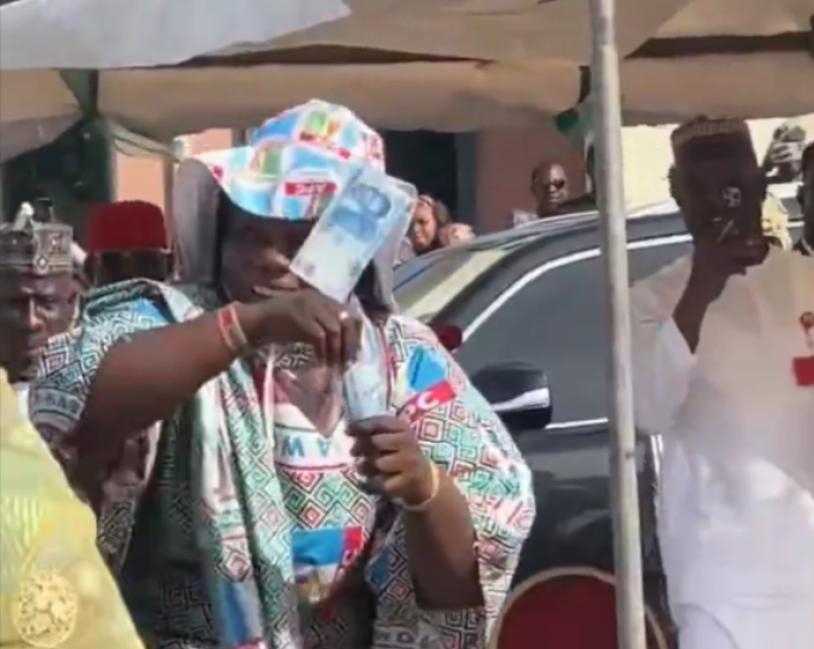
The Economic and Financial Crimes Commission has remained silent after a video emerged showing individuals spraying naira notes on popular praise singer, Dauda Kahutu Rarara, during President Bola Ahmed Tinubu’s official visit to Adamawa State.
The footage, circulated online, captured unidentified persons throwing ₦1,000 notes at the singer while he performed in praise of the president. The incident reportedly happened in Tinubu’s presence at the public event.
The development is coming despite repeated warnings by the Central Bank of Nigeria against abuse of the national currency.
The apex bank had earlier renewed its campaign in Abuja, cautioning Nigerians against acts such as spraying, mutilating, hoarding, or mishandling the naira.
Speaking at the campaign launch, the Deputy Governor of Operations, Mr. Bala Bello, represented by Dr. Adetona Adedeji, Director of Currency Operations and Branch Management, condemned such practices.
He said, “The naira is more than just a means of payment. It represents our national pride, sovereignty, and shared destiny.”
He added, “Unfortunately, careless practices like spraying money at events, tearing or writing on notes, and mutilation destroy its dignity and make it expensive to maintain.”
Observers have pointed out that the commission’s silence over the Adamawa incident contrasts with its previous enforcement actions.
Not long ago, the anti-graft agency arraigned and secured the conviction of musician Hamisu Sa’id Yusuf, popularly known as Hamisu Breaker, alongside Kano-based TikToker Abubakar Ibrahim, also called G-Fresh, for abusing the naira.
Justice S.M. Shuaibu of the Federal High Court sitting in Kano delivered the judgment after viral videos showed the duo spraying and mishandling the currency.
According to case details, Abubakar Ibrahim sprayed and stepped on ₦1,000 notes totaling ₦14,000 while dancing at Rahma Sa’idu’s shop in Tarauni Local Government Area in November 2024. The charge was filed under Section 21(1) of the Central Bank of Nigeria Act, 2007.
The Adamawa video has since triggered fresh reactions, with many questioning why similar action has not been announced by the EFCC following the latest incident.
EFCC keeps mum as naira notes are sprayed on singer Rarara during Tinubu’s visit to Adamawa

ByAdmin
17 February 2026