
By Ahmed Usman
Away from political noise and headline-grabbing theatrics, Jigawa State under Governor Umar Namadi is pursuing a disciplined development path; one that prioritises agriculture, human capital, and long-term economic foundations.
In Nigeria’s political culture, analysts have long relied on improvised metrics to judge elected officials: the first 100 days, the first year, or the widely appealed 18-month threshold, said to be the point when a new administration needs to settle, understand its responsibilities, and develop its own identity separate from the previous government. Yet in practice, Nigerian governments often have only two effective years to deliver results before politics and electioneering reclaim the agenda.
The remaining two years are usually taken over by political campaigns, party struggles, and early preparations for the next election. By that measure, the administrations sworn in May 2023 have crossed the decisive midpoint, and any government unable to clearly articulate its policy direction, measurable outcomes, and long-term vision at this stage must confront uncomfortable questions about competence and priorities.
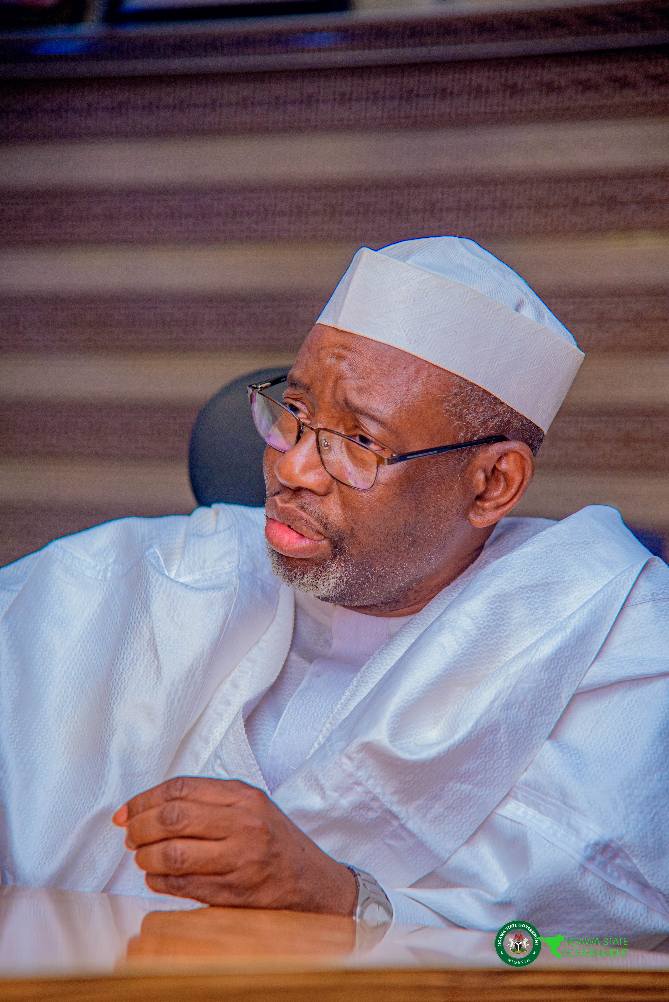
This moment offers a useful lens through which to reassess Jigawa State, a place often dismissed by outsiders as economically marginal or politically inconsequential. For decades, Jigawa was viewed through a narrow lens of poverty rankings and limited industrial activity. With agriculture providing livelihoods for nearly two-thirds of households and with relatively low levels of urbanisation, critics frequently argued that the state lacked the structural foundations to become economically competitive. Such narratives, however, ignore a fundamental truth about development: transformation often begins quietly, long before it becomes visible in national headlines. Under Governor Umar Namadi Danmodi, Jigawa is now presenting evidence of such a shift, deliberate, methodical, and quietly disruptive.
I do not write as a political pundit but as a citizen who cares deeply about his locality, a state too often stereotyped and misunderstood. Jigawa has long been caricatured as peripheral, yet today it provides an unlikely case study in how disciplined governance can chart a new economic course. What makes this transformation compelling is not bombast or political spectacle, but the understated way the administration communicates, through actions, policies, and investments rather than theatrics. The government speaks not in rhetoric but in results that are gradually reshaping the state’s economic and social landscape.
That message is clearest in the administration’s approach to agriculture. Recognising that Jigawa’s comparative advantage lies in its fertile land and large smallholder base, Danmodi has pushed aggressively to modernise the sector. Irrigation expansion, improved access to inputs, and strengthened value chains are already raising yields and market access. Given that Jigawa possesses nearly 150,000 hectares of land suitable for irrigated agriculture, this strategy is not only rational but transformative, positioning the state as a future food production hub in northern Nigeria. These efforts may not dominate front-page news, but they represent the kind of foundational work that changes economic destinies.
That same quiet logic underpins reforms in education, perhaps the most consequential area for a state where literacy remains below the national average. From classroom renovations and teacher training to curriculum enhancement, these interventions reflect a long-term commitment to human capital rather than a search for quick political points. In a region where poor educational outcomes fuel cycles of poverty, ignoring such structural issues would be far more costly than confronting them.
Equally important is the administration’s effort to build an economy that is less dependent on federal allocations. In a country where many states survive almost entirely on monthly revenue from Abuja, Jigawa’s pursuit of internally generated revenue, industrial growth, and investment-friendly reforms reflects an understanding that true development requires financial independence. The state’s infrastructure push, spanning rural electrification, road construction, and urban renewal, is designed to support this transition. Reliable electricity, particularly, is indispensable for revitalising small and medium enterprises, which account for the lion’s share of non-oil employment in Nigeria.
These economic initiatives intersect meaningfully with reforms in healthcare and social protection. For a state grappling with high maternal and infant mortality, investments in primary healthcare centres, vaccination programs, and emergency response systems signal a welcome shift toward preventive, not reactive, governance. Jigawa’s emerging life-cycle social protection model, supporting individuals from pregnancy through childhood, youth, and old age, offers an unusually holistic approach in a country where social safety nets are often fragmented or nonexistent. Together, these policies communicate a consistent message: development is possible only when people are healthy, educated, and economically empowered.
Taken as a whole, the administration’s work sends a subtle but powerful signal. It suggests a government not merely managing day-to-day affairs but intentionally laying the groundwork for what the state could become. This is the essence of Jigawa’s quiet revolution: a governance model that prioritises structure over spectacle and competence over performative politics. It is a reminder that some of the most meaningful transformations are neither loud nor dramatic; they are steady, disciplined, and anchored in long-term vision.
For years, sceptics argued that Jigawa lacked the capacity to catch up with more industrialised states. But development rarely follows a straight line. It accelerates when leadership aligns with strategy, when investments target the roots rather than symptoms of underdevelopment, and when political ambition is tempered with economic realism.
Under Danmodi, Jigawa is beginning to suggest that its future will not be determined by its past reputation but by its present choices. These choices, rooted in economic transformation, human capital development, and institutional stability, show a state no longer content to survive but ready to shape its own future.
This is why the story of Jigawa today matters. It is a reminder that progress does not always announce itself with fanfare. Sometimes, it emerges quietly, through the steady accumulation of policies that, taken together, signal a shift too significant to ignore. Under the right leadership and with the right priorities, even a state long written off by pessimists can begin to rewrite its place in the Nigerian economy. And in Jigawa, that rewriting has unmistakably begun.
Ahmed Usman wrote via ahmedusmanbox@gmail.com.