
By Anas Abbas
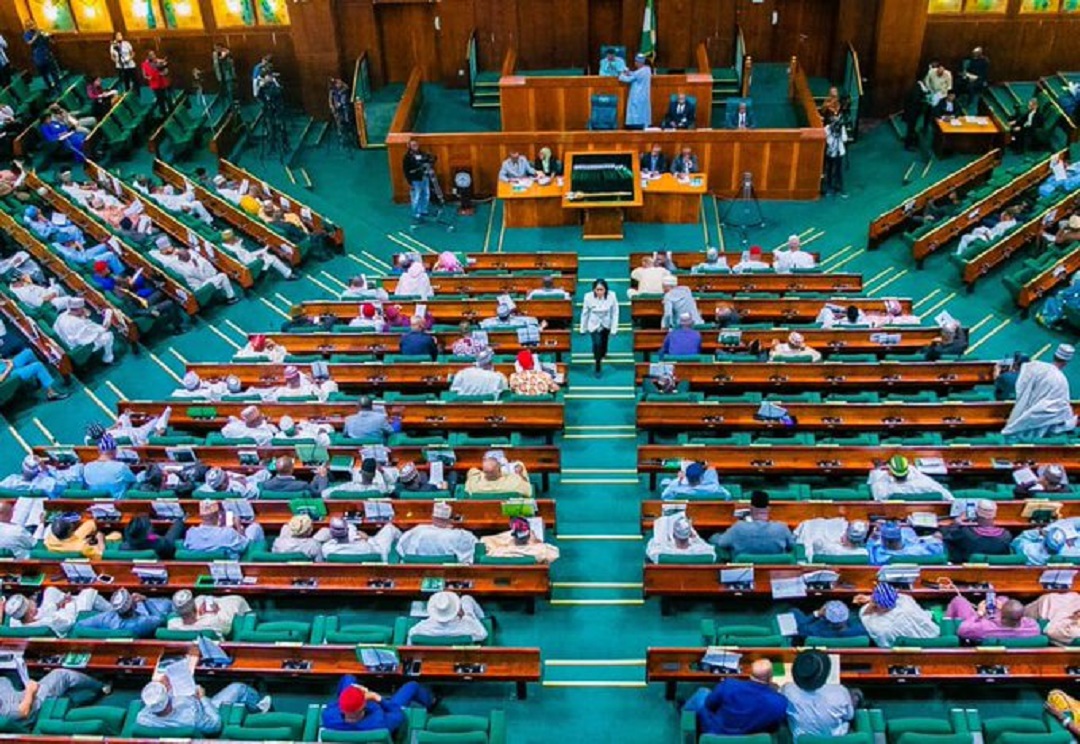
The House of Representatives Committee on Banking Regulations has held a public hearing on two significant financial reform bills that are meant to strengthen Nigeria’s banking sector and improve access to finance for small and medium enterprises (SMEs).
The bills are the Factoring Regulation Bill (HB. 516) which seeks to enable small businesses to access quick and reliable cash by selling their unpaid invoices and the Banks and Other Financial Institutions Act (BOFIA) Amendment Bill (HB. 1168), sponsored by Hon. Moses Oluwatoyin Fayinka, representing Mushin II Federal Constituency of Lagos State.
The latter aims to protect bank customers from fraudulent withdrawals and enforce greater accountability within the banking system.
The public hearing, described as “very productive” by the Chairman of the Committee and Member representing Kaduna North Federal Constituency, Hon. Mohammed Bello El-Rufai, drew wide participation from key financial and business institutions including the Central Bank of Nigeria (CBN), NEXIM Bank, Afreximbank, NACCIMA, NASSI, and several development partners and private sector stakeholders.
Hon. El-Rufai also acknowledged the presence of Mr. Fabian Okoye, Special Adviser on Research, Documentation, and Communication to Governor Uba Sani of Kaduna State, who represented the Governor at the event.
Reflecting on his earlier legislative experience, El-Rufai recalled observing the Factoring Bill during his tenure as Senior Legislative Aide and Chief of Staff to Governor Uba Sani, when the latter chaired the Senate Committee on Banking and Other Financial Institutions in the 9th Senate.
According to him, despite the Central Bank’s progress in managing what he called its “policy trilemma” the exchange rate, inflation, and interest rate Nigeria’s economic realities underscore the urgency of passing the bills.
He noted that inflation as of September 2025 stands at 18.02%, interest rate (MPR) at 27%, unemployment at 4.3%, and poverty at 46% affecting over 139 million people.
A bag of rice now costs ₦70,000. These figures, he said, show why reforms like the Factoring Bill cannot wait.Bello explained that factoring would provide a much-needed financial lifeline for everyday Nigerians.
For traders, artisans, and shop owners, factoring means faster access to cash to restock and stay in business. For small manufacturers and exporters, it improves cash flow to expand production and create jobs.
He emphasized that the BOFIA Amendment Bill complements these efforts by ensuring stronger consumer protection and holding banks accountable for fraud and misconduct.
Across Africa, factoring has been recognized as a powerful tool to unlock working capital and sustain small businesses.
Experts estimate that if properly implemented in Nigeria, it could release over ₦2.7 trillion into the economy, directly boosting communities and livelihoods.
Reaffirming the committee’s commitment to financial reforms that protect consumers and empower SMEs, El-Rufai expressed gratitude to all participants and lauded the support of the Speaker of the House, Rt. Hon. Abbas Tajudeen, GCON, for his leadership.
He concluded that the House Committee on Banking Regulations remains steadfast in its mission to drive reforms that protect consumers, empower SMEs, and grow the economy for everyone.