
By Misbahu El-Hamza
Kano State makes headlines almost every year, and coincidentally, during Ramadan, for water scarcity. The frequent headlines are often attributed to electricity system failures, which disrupt water pumping or equipment faults at water treatment plants, exacerbating the situation.
About ten months ago, upon taking office, Kano State Governor Alhaji Abba Kabir Yusuf declared a State of Emergency to address water scarcity across the state, urging for patience and maximum cooperation from residents. Although I haven’t seen or reviewed the governor’s plan during this emergency, I recall that resolving Kano’s water issues was one of his campaign promises.
I remember when the governor inspected the Challawa Water Treatment Plant in May 2023 and expressed dissatisfaction with its condition. At the time, only two of the six pumping machines were functioning.
Following that, the governor gave the Kano State Water Board a one-week ultimatum to submit its demands to end the state’s water shortage. The public breathed a sigh of relief. Personally, I had hoped that we’d finally overcome this hardship.
Unfortunately, for nearly a year now, the situation has been prevalent not only in urban areas but even worse in rural communities. We are not only seeing those trending headlines of water scarcity in Kano; we’re experiencing the brunt of it.
Recently, the price of a 25-litre jerrican of borehole water in Kano surged by ₦50 to ₦150. Someone told me that he bought one at ₦200 around Kurmi market. In areas like Hotoro, Nassarawa LGA, where I reside near Kumbotso LGA housing the Challawa water plant, prices rose from ₦40 to ₦70 or higher. The Chalawa water plant is believed to have the capacity to supply the whole of Kano with water. Still, we rely heavily on individual boreholes for water, with little to no infrastructure connecting us to the water plant.
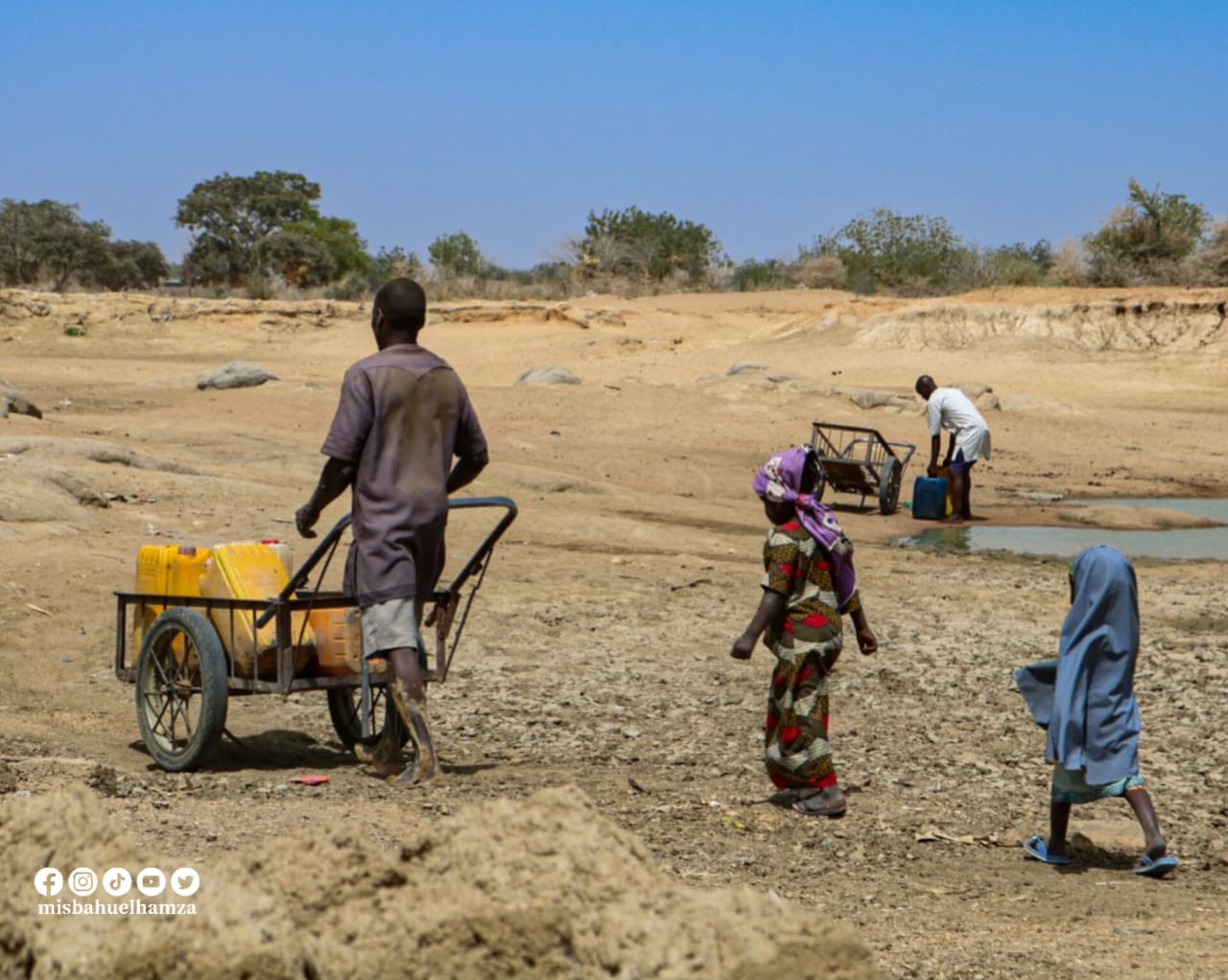
While I reside in a suburb and can afford to buy a jerrican of what seems to be clean water, in the rural areas where I often visit for work, the situation is dire. Many communities lack access to clean water sources, with broken or dried-up boreholes and wells being common. Residents, including young children, often resort to fetching water from stagnant ponds shared with cows, donkeys, camels, and even dogs. This water is what they use for all daily activities, posing serious health risks.
It’s evident that both state and local governments have neglected these communities, offering little to no solutions for their water woes. Where you see boreholes or wells in these communities, they are either constructed by individual donors or (charity) organizations, and a handful are constructed by politicians.
Governor Alhaji Abba Kabir Yusuf must be aware of the current water crisis in both rural and urban Kano. However, the pressing question remains: how long will his State of Emergency address the suffering caused by the persistent water scarcity or total lack of it across the state?
Three days ago, I heard a jingle apologizing for the water scarcity in the Kano metropolitan area, blaming the repair works at Challawa and Tamburawa treatment plants. It’s said to have been sponsored by the Kano State Water Board. To me, the jingle suggests the governor partly fulfilled his pledge; now, it’s the board’s turn to restore the water supply—or at least that’s my assumption.
I know this isn’t the first time the board has apologized. In 2022, the then-managing director of the board was quoted as apologizing to Kano residents for failing to supply water during Ramadan. At that time, 25 litres of borehole water cost between ₦30 and ₦100.
I remain hopeful that before his remaining three years expire, Alhaji Abba Kabir Yusuf will emerge as Kano’s hero by addressing the water scarcity issue and providing relief to the growing population, including those in rural areas.
As the governor continues to address our water problem within this emergency period, I hope the demands the water board submitted to him as requested include: establishing new plants and reservoirs or enhancing existing ones, extending mainline pipes to suburbs and rural areas, ensuring independent power supply for the plants, and securing permanent employment for existing and additional staff. If the board manages its expenses independently, perhaps shifting them to the state payroll would also improve efficiency.
With reliable service and an effective system in place, the board and the state government should be rest assured that Kano people will be more willing to pay for water, and the board does not need to depend heavily on its revenue from the industries it diverts our little water to.
Misbahu wrote from Kano via misbahulhamza@gmail.com.