
By Sabiu Abdullahi
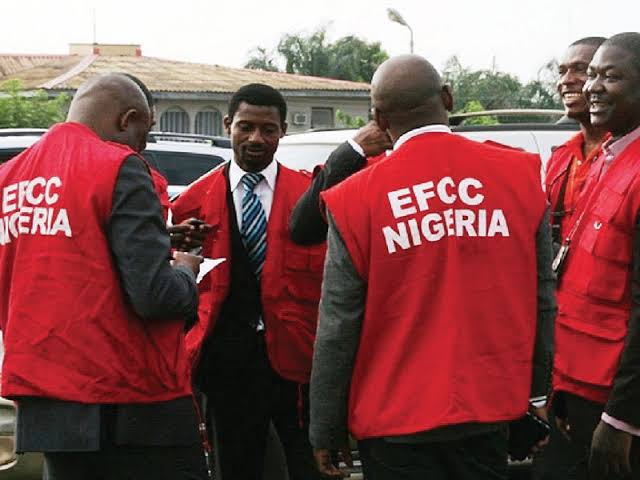
The Economic and Financial Crimes Commission (EFCC) has dusted off long-dormant corruption cases against 13 former governors, with a staggering N772 billion hanging in the balance.
This comes amidst investigations into an additional N81.6 billion allegedly looted from the Ministry of Humanitarian Affairs and Poverty Alleviation, revealing a renewed determination by the anti-graft agency to tackle high-profile financial crimes.
Sources within the EFCC confirmed the agency’s renewed focus on these high-profile cases, some dating back over a decade.
Among the ex-governors under scrutiny are prominent figures like Kayode Fayemi of Ekiti State, Ayo Fayose (also of Ekiti), Bello Matawalle (current Minister of State for Defence), and Chimaroke Nnamani of Enugu State.
These cases involve a web of alleged financial misdeeds, including money laundering, fund diversion, and misappropriation of public funds.
A senior EFCC official, who spoke on condition of anonymity, said, “I want to assure you that, as far as the commission is concerned, nobody is above the law. What the EFCC Chairman, Ola Olukoyede, has done since assuming office is that he has reviewed all the high-profile cases he inherited.”
The EFCC’s renewed drive extends beyond ex-governors. The agency is also investigating a separate $2.2 billion scandal involving individuals like former National Security Adviser Sambo Dasuki, the late media mogul Raymond Dokpesi, and ex-governor Attahiru Bafarawa.
These individuals are accused of diverting and misappropriating funds meant for arms procurement during the fight against terrorism, raising concerns about national security and accountability.
This aggressive anti-corruption push appears to be a marked shift under the new EFCC chairman, Abdulrasheed Bawa. Since taking office in 2021, Bawa has pledged to tackle corruption head-on, regardless of the individuals involved.
The reopening of these high-profile cases is a potent signal of his intent, promising a potentially seismic shift in the fight against graft.
Whether the EFCC can successfully navigate the legal complexities of these cases and secure convictions remains to be seen.
However, the agency’s renewed focus on tackling high-level corruption offers a glimmer of hope for Nigerians yearning for accountability and a more transparent governance system.
The coming months are likely to be pivotal, with close scrutiny on the progress of these investigations and the ultimate fate of the ex-governors and other individuals implicated in these multi-billion-naira scandals.