
By Sabiu Abdullahi
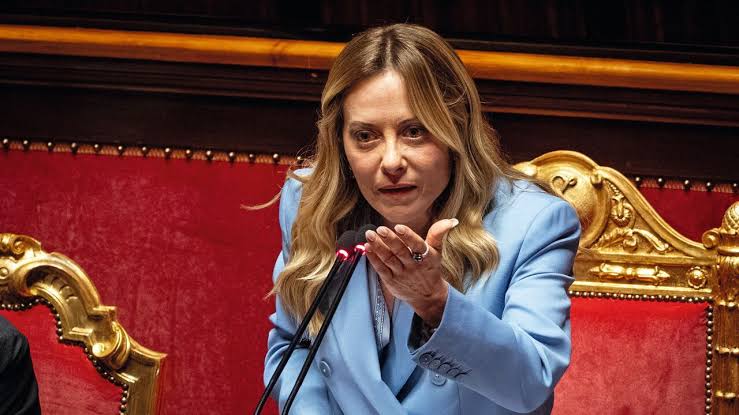
Italy is set to introduce measures that would prohibit the wearing of burqas and niqabs in schools and place a limit on the number of foreign students allowed in individual classes, Prime Minister Giorgia Meloni has announced.
Meloni disclosed the planned measures on Sunday at a national gathering of the youth wing of her Brothers of Italy party in Rome, as immigration and integration remain major issues ahead of Italy’s next general election.
She also said parents of foreign students facing serious difficulties integrating into the Italian school system would be required to learn the Italian language.
“For us, anyone who comes to Italy and wants to build their future here must learn our language, understand our culture, and respect our rules,” she said to a standing ovation at the Gioventu Nazionale national festival in Rome. “It is the only serious way to welcome them.”
The proposals will first have to be approved by the government before being sent to parliament. Once approved by the government, the changes would require parliamentary approval within 60 days to become law.
Italy already has regulations concerning face coverings. A 1975 law prohibits the use of helmets or clothing that makes identification difficult without a justified reason, while a 2008 ruling allowed full-face coverings for religious or cultural reasons, provided the face can be uncovered when identity verification is required.
Meloni’s announcement specifically concerns burqas and niqabs, which cover the face, rather than ordinary headscarves. However, ANSA reported that Meloni also referred to a proposed ban on hijabs in schools in her remarks.
On foreign students, Meloni said the government would introduce a legal maximum for the number of foreign pupils in each class. Italy already has a 30 per cent guideline concerning foreign students in classrooms, although the head of the National Association of School Principals said on Sunday that the existing rule has been difficult to apply in practice.
The announcement comes as Meloni’s government faces political pressure from parties further to the right, while migration and cultural integration remain prominent issues in Italian politics.
The proposed measures have yet to become law and will require parliamentary consideration before they can take effect.