
By Onumoh Abdulwaheed
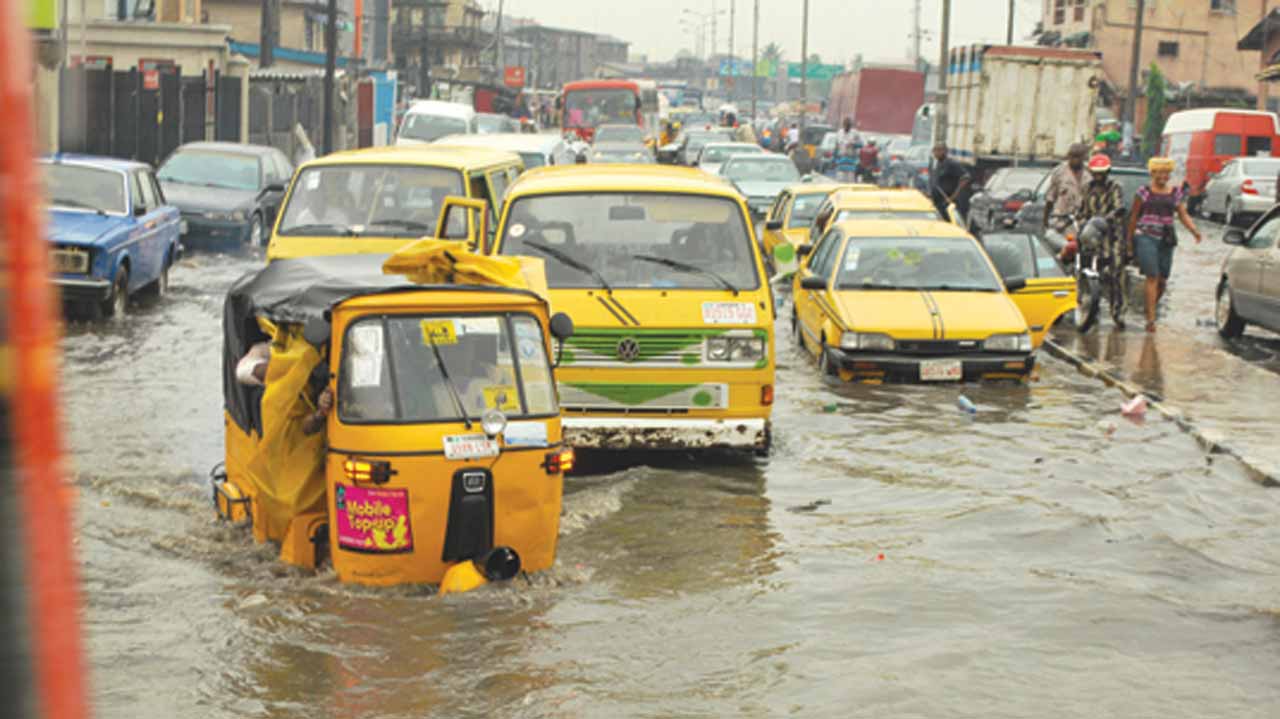
The water came first to the Ojota Maryland bridge, then to Lekki, then to Oshodi. By mid-morning, offices sat locked, bus stops stood empty, and cars floated where traffic should have been. On social media, Lagosians did what they always do when the rains return: they joked, filmed, and asked again where the government was.
Nigeria has rehearsed this scene for years. Not a single flood, but a season that arrives on schedule, floods a familiar set of streets, and leaves behind the same unanswered question: why does this keep happening?
The numbers say it will keep happening. The Nigeria Hydrological Services Agency’s 2026 flood outlook warns that 33 states and more than 14,000 communities sit in high-risk zones this year. It is not a new warning. In 2022, floods killed over 600 people, displaced 1.4 million, and destroyed more than 82,000 homes. By 2024, another million people had been displaced, and 1.3 million hectares of farmland were lost. Economists put the average cost of the 2022 and 2024 disasters at $6.68 billion money that vanishes from an economy that can least afford it, shaving up to half a percentage point off agricultural GDP each bad season.
Nowhere is the pattern of official neglect clearer than at Dasin Hausa. In the 1980s, Nigeria and Cameroon agreed to build twin dams: Lagdo, in Cameroon, to hold back water, and Dasin Hausa, in Adamawa State, to absorb whatever Lagdo released. Cameroon built its dam. Nigeria did not. More than forty years on, Dasin Hausa exists mainly in feasibility studies and press statements, while Lagdo’s floodwaters continue to pour, almost on cue, into Benue, Kogi, Anambra and Delta.
Jonathan Ikwebe, a farmer in Benue whose rice fields were wiped out in 2022, put it plainly: “We are at the mercy of the water.” He said the government keeps promising a dam that nobody sees being built.
That promise has been renewed often. In 2023, the Senate urged President Bola Tinubu to prioritise the project. In 2025, officials announced a public-private partnership to fast-track it, citing renewed political will. In 2026, the dam is still on paper. Officials cite funding and bureaucracy; critics say what is missing isn’t money but the will to finish what’s been started.