By Sabiu Abdullahi
Nigeria and Malaysia have taken fresh steps to reinforce cooperation between their customs authorities, with a focus on improving trade processes and tightening border control systems.
This followed a series of high-level meetings in Malaysia involving the Nigeria Customs Service (NCS) and the Royal Malaysian Customs Department (RMCD).
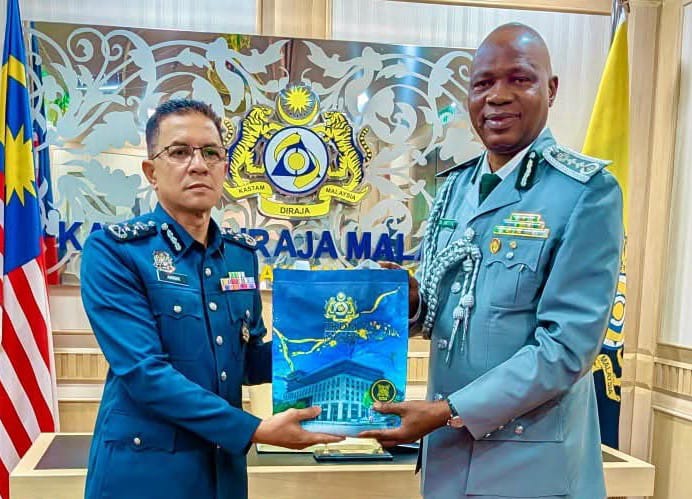
The engagements took place during an official visit by the Comptroller-General of Customs, Bashir Adewale Adeniyi, to the RMCD headquarters. The visit coincided with his attendance at the Defence Services Asia (DSA) Malaysia 2026 event.
Adeniyi was hosted by his Malaysian counterpart, Director-General Dato’ Haji Amran bin Haji Ahmad. Both officials held discussions that centred on strengthening institutional ties, advancing customs modernisation, and improving coordination in border management.
Trade relations between the two countries have continued to expand in recent years. Nigeria’s imports from Malaysia rose from ₦159.9 billion in 2020 to ₦716.0 billion in 2024. Total trade between both nations has reached about ₦1.82 trillion within five years.
During the talks, Adeniyi emphasised the importance of establishing a more structured partnership between the two customs services. He described Malaysia as a major trading partner, noting that Nigeria imports products such as crude palm oil, refined palm olein, aviation fuel, machinery, and other industrial materials.
He also pointed out that customs agencies play a key role in supporting legitimate trade while protecting national economic and security interests.
Despite the long-standing trade relationship, both sides observed that there is no formal legal framework guiding their customs cooperation. They agreed to begin the process of developing a Mutual Recognition Agreement under the World Customs Organisation (WCO), which will be pursued through diplomatic channels.
As part of the engagement, Malaysian officials presented their border management structure, including the Malaysian Border Control and Protection Agency (AKPS), which operates as an integrated frontline system.
In response, the Nigerian delegation highlighted ongoing reforms within the NCS, including the Authorised Economic Operator (AEO) programme and other initiatives designed to speed up cargo clearance, cut costs, and improve compliance.
Both parties stressed the need for closer collaboration in intelligence sharing, enforcement efforts, and the use of technology to tackle illicit trade and cross-border crimes.
The NCS reaffirmed its commitment to building stronger bilateral and multilateral partnerships as part of its modernisation drive. It expressed optimism that the outcomes of the visit will enhance operational efficiency, promote smoother trade, and strengthen border security in line with Nigeria’s economic goals.
While in Malaysia, Adeniyi also met with officials at the Nigerian diplomatic mission and the Defence Office, where he commended their role in promoting Nigeria’s interests and assisting citizens abroad.