By Sabiu Abdullahi
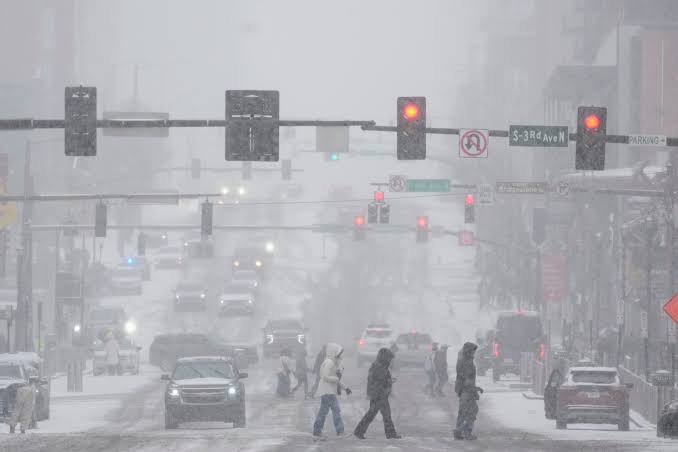
A powerful winter storm sweeping across the United States has claimed at least 10 lives and caused widespread disruption, with authorities urging residents to stay off roads as freezing conditions continued into Monday.
According to a report by Al-Jazeera, at least 20 states, along with the US capital, Washington, DC, declared states of emergency after snow, sleet and freezing rain knocked out electricity to nearly a million people. Power outages, flight cancellations and dangerous travel conditions affected large parts of the country.
As the storm moved east and south, forecasters warned that a trailing Arctic air mass could push temperatures to dangerously low levels for several days. The US National Weather Service (NWS) said Americans should expect similar conditions to continue into Monday morning.
In New York City, Mayor Zohran Mamdani confirmed that five people were found dead outdoors over the weekend during subzero temperatures. While he did not directly link the deaths to the storm, he told reporters there was “no more powerful reminder of the danger of extreme cold”.
Texas authorities reported three deaths, including that of a 16-year-old girl who died in a sledding accident. In Louisiana, the state’s Department of Health said two people died from hypothermia.
PowerOutage.com data showed that more than 840,000 customers were without electricity as of Sunday night. The worst-hit areas were mostly in the southern United States, where the storm strengthened on Saturday. Tennessee recorded more than 300,000 homes and businesses without power after ice brought down power lines. Louisiana, Mississippi and Georgia each reported over 100,000 outages.
Officials warned that the loss of electricity posed a serious risk, especially in the South, where extreme cold is less common and temperatures could break records, according to the NWS. Residents were advised to remain indoors due to hazardous conditions.
Air travel also faced major disruptions. Several major airports in New York, Philadelphia and Washington, DC, cancelled nearly all flights scheduled for the day.
Meteorologists explained that the storm resulted from a stretched polar vortex, a system of cold, low-pressure Arctic air that can expand and send frigid temperatures across North America. Scientists said such events may be linked to climate change, although natural climate variability also plays a role.
The NWS warned that heavy ice could lead to “long-duration power outages, extensive tree damage, and extremely dangerous or impassable travel conditions”, particularly in states not accustomed to severe winter weather.
Authorities also cautioned that life-threatening cold could persist for up to a week after the storm, especially in the Northern Plains and Upper Midwest. Forecasts show wind chill temperatures dropping to as low as -45 degrees Celsius (-50 degrees Fahrenheit), levels that can cause frostbite within minutes.
Extreme winter storm claims at least 10 lives, leaves nearly one million without power across US

ByAdmin
26 January 2026