By Sabiu Abdullahi
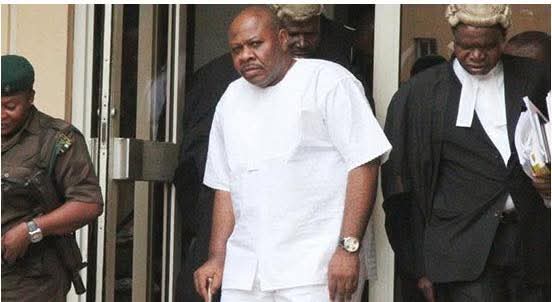
The Economic and Financial Crimes Commission (EFCC) has filed an appeal at the Supreme Court of Nigeria, seeking an order to set aside the bail granted to Lagos socialite, Fred Chijindu Ajudua.
The anti-graft agency lodged the appeal in Abuja on February 20, 2026. It is contesting the ruling of the Court of Appeal in Lagos, which admitted Ajudua to bail on January 30, 2026.
Through its lawyer, S.K. Atteh, the EFCC argued that the appellate court made a legal error when it dismissed its preliminary objection and proceeded to grant bail to the defendant.
The Commission maintained that the Court of Appeal did not properly interpret an earlier judgment of the Supreme Court delivered on May 9, 2025 in related matters involving Ajudua. It insisted that the apex court had already settled the issue of bail when it directed that the defendant remain in custody pending the speedy trial of the case.
The EFCC also faulted the appellate court’s position that the Supreme Court did not order Ajudua’s continued detention. It described that view as inconsistent with the principle of judicial hierarchy and the binding nature of Supreme Court decisions.
At the centre of the dispute is the interpretation of aspects of the Supreme Court ruling, especially on the link between jurisdiction and bail. The Commission argued that the Court of Appeal ignored key parts of the judgment which, in its view, had conclusively resolved the issue of bail.
It further stated that the decision to grant fresh bail breached Sections 235 and 275(1) of the 1999 Constitution (as amended), which establish that rulings of the Supreme Court are final and binding on all lower courts.
The EFCC also challenged the medical grounds relied upon by the appellate court in granting bail. It argued that the medical report dated November 19, 2025 did not present new circumstances.
According to the Commission, Ajudua has had kidney-related health issues since 1987 and has repeatedly relied on that condition to delay proceedings since the charge was filed in 2005. It also pointed to inconsistencies in medical reports issued by the same consultant and said the appellate court did not properly assess the evidence before granting bail.
The agency warned that allowing the defendant to remain on bail could undermine the Supreme Court’s directive for a speedy trial. It referred to a previous instance where only one prosecution witness testified over a long period despite the defendant being on bail.
The EFCC is asking the apex court to revoke the bail granted on January 30, 2026 and to restore the trial court’s decision of November 20, 2025, which denied bail.
No date has been fixed for the hearing of the appeal.
Ajudua is currently facing trial over allegations that he defrauded a Palestinian businessman, Zad Abu Zalaf, of $1.043 million.
EFCC asks Supreme Court to cancel Ajudua’s bail over alleged $1.043 million fraud

ByAdmin
27 February 2026