By Sabiu Abdullahi
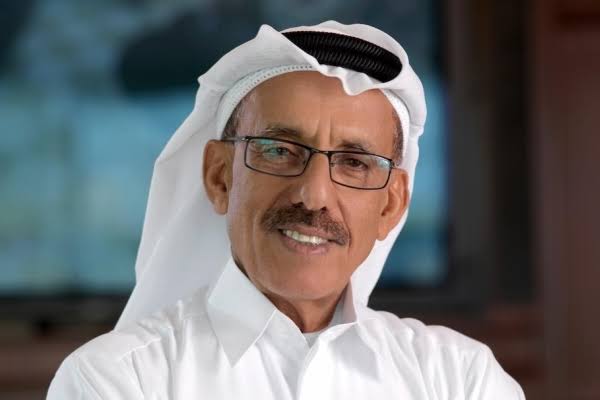
A prominent businessman from the United Arab Emirates, Khalaf Ahmad Al Habtoor, has asked United States President Donald Trump to explain the reasons behind Washington’s decision to engage in war with Iran alongside Israel.
Habtoor raised the concerns in an open letter posted on X, where he criticised the move and questioned whether the US leader had considered the possible consequences for countries in the Gulf region.
In the message, he asked Trump: “Who gave you the authority to drag our region into a war with #Iran? And on what basis did you make this dangerous decision?
Did you calculate the collateral damage before pulling the trigger? And did you consider that the first to suffer from this escalation will be the countries of the region itself!
The peoples of this region have the right to ask as well: Was this your decision alone? Or did it come as a result of pressures from #Netanyahu and his government?”
Habtoor, who founded and chairs the Al Habtoor Group, also accused the US president of exposing Gulf Cooperation Council (GCC) countries to dangers they did not choose.
He wrote: “You (Trump) have placed the countries of the #GulfCooperationCouncil and the Arab countries at the heart of a danger they did not choose. Thank God, we are strong and capable of defending ourselves, and we have armies and defences that protect our homelands, but the question remains: Who gave you permission to turn our region into a battlefield?”
Neither President Trump nor the White House has issued a response to the letter. The government of the UAE has also not publicly endorsed the message.
The letter is seen as a rare public criticism from a prominent figure in the UAE. It reflects rising concern in the Gulf as the conflict between the US, Israel and Iran continues into its sixth day.
Last week, US and Israeli forces launched coordinated attacks on Iran. The strikes reportedly targeted military positions as well as civilian facilities. Iran responded with its own attacks against Israel, US positions and locations in Gulf countries that host American military assets.
Reports indicate that the first five days of the conflict, described by the US as Operation Epic Fury, have caused heavy casualties. Estimates suggest that more than 2,400 people have died in Iran, including at least 181 children.
Iranian authorities claim that US-Israel strikes during the early hours of the war hit the all-girls Minab Primary School. According to Tehran, the attack killed more than 165 female students and school staff. Israel has denied responsibility, while the United States says it is investigating the incident.
Washington says six American soldiers have died so far in the conflict. Iran, however, claims it has killed more than 500 US troops.
A US-based conflict monitoring organisation reports that Iran has launched more drones and missiles at Gulf states than at Israel since the war began.
Data from the Critical Threats Project (CTP), part of the American Enterprise Institute, states that Iran fired 255 drones and missiles at Israel after the conflict started on February 28. During the same period, the report says 2,171 drones and missiles were directed toward Gulf countries, especially the United Arab Emirates, Bahrain and Kuwait.
According to the report, 1,138 of those attacks targeted the UAE, making it the most heavily struck country in the conflict.
In his letter, Habtoor also criticised the escalation in relation to Trump’s Board of Peace initiative announced in January 2026. The programme aimed to rebuild Gaza and was backed by about seven billion dollars pledged by Gulf states.
He wrote: “For before the ink has dried on the #BoardOfPeace initiative that you announced in the name of peace and stability, we find ourselves facing a military escalation that endangers the entire region. So where did those initiatives go? And what is the fate of the commitments made in the name of peace?”
Habtoor further questioned whether the financial contributions from Gulf countries were meant to support peace or to fund a war.
He stated: “Most of the funding proposed in those initiatives came from the countries of the region themselves, and from Arab Gulf countries that contributed billions of dollars on the basis of supporting stability and development. And these countries have the right to ask today: Where did this money go? And are we funding peace initiatives or funding a war that exposes us to danger?”
The businessman also argued that the conflict could impose significant financial costs on Americans.
He wrote: “And here they are today, finding themselves in a war funded from their money and taxes, with costs ranging, according to the Institute for Policy Studies (IPS), between 40-65 billion dollars for direct military operations, and could reach 210 billion dollars including economic impacts and indirect losses if it lasts four to five weeks, not to mention the sacrifice of Americans themselves in a war in which they have neither camel nor she-camel.”
Habtoor also criticised Trump for engaging in foreign military operations despite previous promises to focus on domestic priorities.
In the letter he wrote: “You have even broken your promises not to get involved in wars and to focus only on America and put it at the top of your priorities, as you ordered foreign military interventions during your second term that included seven countries: Somalia, Iraq, Yemen, Nigeria, Syria, Iran, and Venezuela, in addition to naval operations in the Caribbean and the eastern Pacific Ocean.”
He added: “You directed more than 658 foreign air strikes in your first year in office, which equals the total strikes in Biden’s entire term, for which you directed your arrows of criticism for involving the United States in foreign wars.”
Habtoor concluded his message by urging greater transparency from the US leadership.
He wrote: “True leadership is not measured by war decisions, but by wisdom, respect for others, and pushing toward achieving peace. And if these initiatives were launched in the name of peace, then we have the right today to demand full transparency and clear accountability.”