
By Sabiu Abdullahi
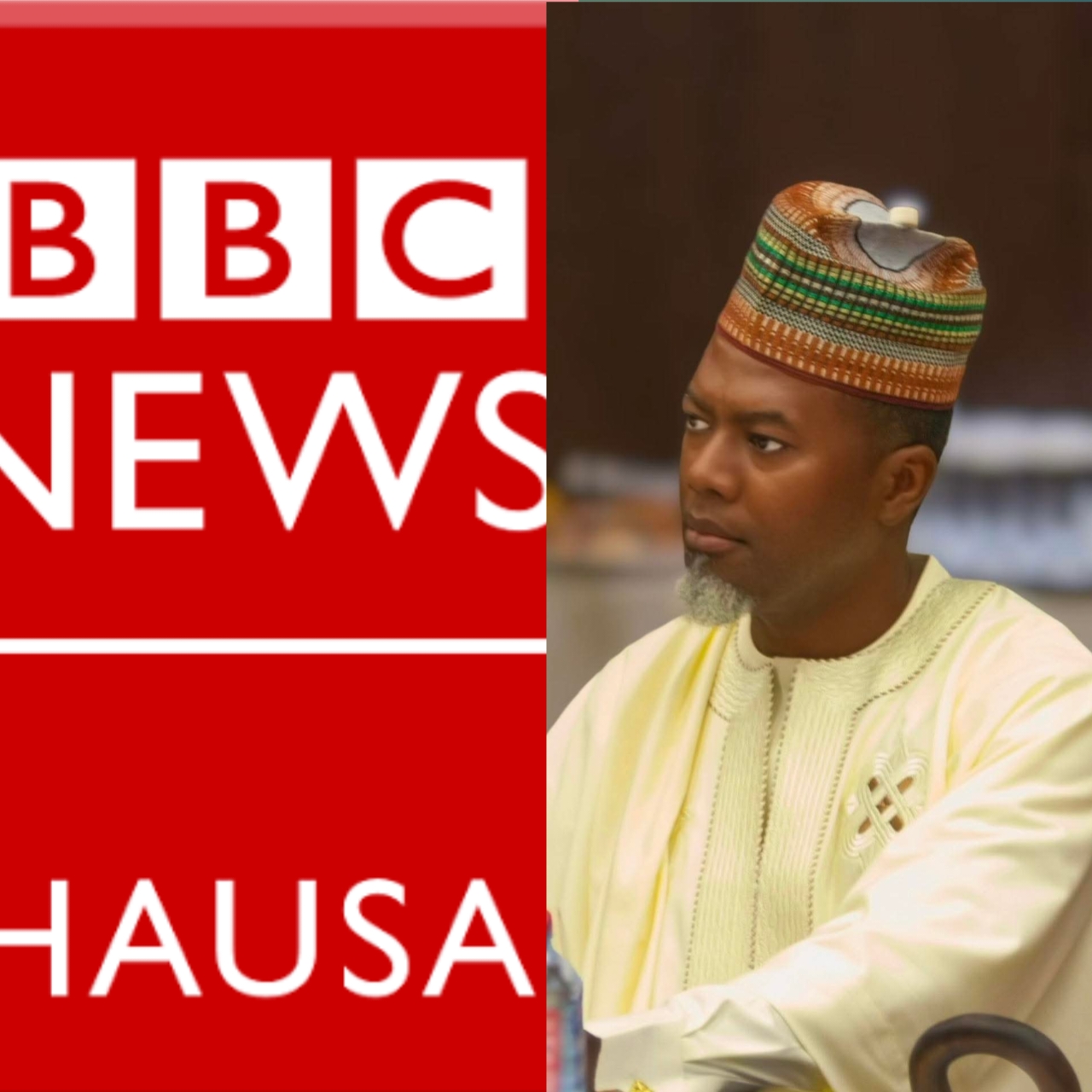
Former presidential aide and author, Reno Omokri, has raised concerns over the growing influence of BBC Hausa in Nigeria, arguing that no foreign media organisation should wield such power over a sovereign country.
In a detailed commentary, Omokri questioned whether it was healthy for Nigeria that BBC Hausa appears to have more influence than any local institution. He said one of his strongest wishes for the country was for the Federal Government to establish a Hausa-only radio station, possibly to be known as Radio Nigeria Hausa.
According to him, such a station should recruit the best Hausa-speaking journalists and broadcasters and operate with full editorial independence, even if it remains government-owned. He stressed that the journalists must be paid world-class salaries, warning that without competitive pay, foreign Hausa-language services would continue to attract Nigeria’s best talents.
Omokri explained his focus on Hausa by noting that the language is the most widely spoken in West Africa and the most developed indigenous language in Nigeria. He stated that about half of Nigeria’s population speaks Hausa, with many citizens relying on it as their only language. He also argued that, apart from Lukumi Yoruba, Hausa is the only indigenous language in the country that continues to grow, while others gradually decline as English gains ground.
He further claimed that BBC Hausa is the most influential and most listened-to media platform in Nigeria, with an estimated weekly audience of about 20 million listeners. He challenged readers to name any television station, radio outlet, or newspaper with a similar reach. Omokri added that radio remains the dominant medium in Nigeria and called on readers to verify this claim.
The commentator also asserted that BBC Hausa enjoys an 89 per cent trust rating in Nigeria, a figure he said few public or private institutions in the country could match. He linked this high level of trust to major historical moments, including the interview with late President Umaru Musa Yar’Adua from his sick bed and the announcement of General Sani Abacha’s death, both of which were first reported by BBC Hausa.
While acknowledging that some television stations, such as Channels Television, may reach millions of viewers, Omokri pointed out that television requires electricity and a TV set. He contrasted this with radio, which he described as cheap, portable, and accessible, since a simple battery-powered device allows listeners to tune in from anywhere.
Omokri expressed deeper concern over the ownership structure of the BBC. He noted that the British Broadcasting Corporation is a public service broadcaster established, owned, and controlled by the British government. He explained that the BBC chairman is appointed by the British monarch on the advice of the UK government, while the board also comes from government appointments.
He argued that, regardless of goodwill, the primary responsibility of the BBC leadership would be to protect British interests. He warned that Nigeria’s most influential media platform remains foreign-owned and operated, with the capacity to shape the worldview and political opinions of millions of Nigerians.
Raising a hypothetical scenario, Omokri asked what would happen if British and Nigerian interests were to clash, as they had in the past. He admitted that BBC Hausa might be convenient for Nigeria, but insisted that it was not in the country’s long-term interest.
He said he doubted that any European country or nation in the Western Hemisphere would accept a situation where a foreign media organisation held such sway over its population. In his view, media power should be firmly in Nigerian hands to protect national independence and sovereignty.
Omokri emphasised that the media plays a decisive role in shaping nations, citing the United States as a global power strengthened by both its media influence and military strength. He warned that BBC Hausa could, if it chose, influence Nigerian voting behaviour, consumer choices, and foreign alignment.
He concluded that allowing a foreign broadcaster to hold such influence over a sovereign nation posed a serious risk and called on Nigerians not to underestimate the power of the media.