
By Sabiu Abdullahi
The United States Embassy in Lagos has clarified that the issuance of visas to foreign nationals is a privilege granted by the country, not a right.
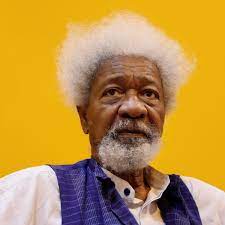
The statement came following reports that the US had revoked the B1/B2 visa of Nobel laureate, Prof. Wole Soyinka.
Responding to an inquiry from The PUNCH on Thursday, the US Consulate in Lagos explained that it could not provide details about Soyinka’s visa due to confidentiality laws.
“Under U.S. law, visa records are generally confidential. We will not discuss the details of this individual visa case,” the US Nigeria Mission spokesperson stated.
The Mission further noted that visas could be withdrawn at any time, depending on the circumstances.
“Visas are a privilege, not a right. Every country, including the United States, can determine who enters its borders. Visas may be revoked at any time, at the discretion of the U.S. government, whenever circumstances warrant,” it added.
Soyinka had revealed during a press briefing in Lagos on Tuesday that his visa had been cancelled by the US authorities.
Speaking at the event titled “Unending Saga: Idi Amin in Whiteface” at Kongi’s Harvest, Freedom Park, the 91-year-old writer announced that he currently had no valid visa to the United States.
“It is necessary for me to hold this press conference so that people in the United States who are expecting me for this event or that event do not waste their time. I have no visa; I am banned, obviously, from the United States. And if you want to see me, you know where to find me,” Soyinka told journalists.
The Nobel laureate said he received the revocation notice in a letter from the US Consulate General in Lagos, dated October 23, 2025. He expressed confusion about the reason behind the decision, noting that he had never committed any offence against the United States.
“I’ve started looking back—have I ever misbehaved towards the United States of America? Do I have a history? Have I been convicted? Have I gone against the law anywhere?” he wondered.
While reflecting, Soyinka recalled two incidents that occurred decades ago, though he doubted they were linked to the current situation.
“I remember pleading guilty at the airport one day. I was landing in Chicago. It was my first major production in the United States. … I had gone to an Indian restaurant in London … I forgot to declare those chilies. … I think I remember paying about $25 or so. So, that’s one possible crime that could have been dug up,” he explained.
He continued, “Two, the American Society of African Culture had an international conference some years ago … I had a confrontation with the police (over) some racist conduct by the receptionist, which led to the police being called. … So, I could be convicted, if you like, for, shall we say, disobeying orders from law officers of the US. This was at least 30 years ago.”
According to Soyinka, the revocation letter stated that his non-immigrant visa “has been revoked pursuant to the authority contained in the U.S. Department of State regulations 22 CFR 41.122 and is no longer valid for application for entry into the United States.”
It also mentioned that “additional information became available after the visa below was issued.”
The Consulate requested that Soyinka submit the document to the embassy for “physical cancellation,” a request he described humorously. “If you have plans to travel to the United States, you must apply again to re-establish your qualifications for a new non-immigrant visa,” the letter added.
Soyinka’s visa had been issued on April 2, 2024, in Lagos.
Renowned globally as a playwright and activist, Soyinka became Africa’s first Nobel Prize winner in Literature in 1986. He has taught at several American universities over the years.
The visa cancellation has stirred public debate about the tightening of US immigration policies, particularly regarding African visitors.